Keyword Search Volume Checker
Powered by Semrush Keyword Overview
Check the monthly search volume of any keyword. Find keywords people are actually searching for and uncover opportunities worth targeting.
For example: digital marketing running shoes
- Monthly search volume for any keyword
- Keyword Difficulty score from 0 to 100
- Search intent behind the keyword
- Cost per click (CPC) data for paid search
- The top 10 ranking pages and SERP features
Need a bulk keyword search volume tool? Try Keyword Overview
Keyword results for: keyword research
Monthly Search Volume
301K
N/A
Keyword Difficulty
68%
DifficultN/A
Search Intent
Commercial
N/A
Average CPC
$1.42
N/A
Global Search Volume
i438.2K
N/A
AI Overview
Present in SERP
Google shows an AI Overview for this keyword. Expect lower click-through to the organic results below.
Take your keyword research to the next level
Find winning keywords, track your rankings, and uncover what your competitors are ranking for with one toolkit.
Start My Free TrialGoogle search results for: keyword research
See the top ten Google results in the target location for your keyword, including key metrics for each URL.
| Position | URL | AS | Ref Domains | Backlinks | Traffic | URL Keywords |
|---|---|---|---|---|---|---|
| 1 |
nike.com
https://nike.com/running-shoes
|
92 | 28.2K | 3.1M | 12.4K | 3.7K |
|
AI Overview
|
||||||
| — |
nytimes.com
https://nytimes.com/wirecutter/reviews/best-running-shoes/
|
95 | 41.2K | 3.8M | 6.8K | 1.7K |
| — |
reddit.com
https://reddit.com/r/running/comments/best_running_shoes_2026/
|
96 | 38.4K | 4.2M | 7.1K | 2.1K |
| — |
runnersworld.com
https://runnersworld.com/gear/g20862953/best-running-shoes/
|
81 | 12.6K | 478K | 8.2K | 1.9K |
| 2 |
runnersworld.com
https://runnersworld.com/gear/g20862953/best-running-shoes/
|
81 | 12.6K | 478K | 8.2K | 1.9K |
|
People also ask
|
||||||
| — |
How often should you replace running shoes?
https://runnersworld.com/gear/a20865505/when-to-replace-running-shoes/
|
81 | 12.6K | 478K | 4.7K | 1.2K |
| — |
What are the best running shoes for flat feet?
https://verywellfit.com/best-running-shoes-flat-feet-4844488
|
75 | 8.1K | 312K | 3.4K | 980 |
| — |
How much should I spend on running shoes?
https://fleetfeet.com/blog/how-much-should-running-shoes-cost
|
68 | 4.2K | 145K | 2.1K | 640 |
| 3 |
dickssportinggoods.com
https://dickssportinggoods.com/c/mens-running-shoes
|
78 | 7.2K | 241K | 6.1K | 1.4K |
| 4 |
adidas.com
https://adidas.com/us/running-shoes
|
90 | 22.4K | 2.4M | 9.8K | 2.8K |
| 5 |
roadrunnersports.com
https://roadrunnersports.com/running-shoes
|
62 | 3.4K | 98K | 2.1K | 820 |
| 6 |
zappos.com
https://zappos.com/running-shoes
|
84 | 9.7K | 512K | 4.4K | 1.3K |
| 7 |
brooksrunning.com
https://brooksrunning.com/en_us/running-shoes/
|
71 | 4.8K | 187K | 3.2K | 990 |
| 8 |
hoka.com
https://hoka.com/us/en/road-running-shoes/
|
73 | 5.1K | 142K | 2.6K | 760 |
|
Video Carousel
|
||||||
| — |
Best Running Shoes 2026 — Top 10 Picks
https://youtube.com/watch?v=kSh4f8X2dRk
|
100 | 312K | 94.2M | 11.4K | 3.2K |
| — |
How to Choose Running Shoes for Beginners
https://youtube.com/watch?v=Q8xVm2nL9pE
|
100 | 312K | 94.2M | 8.7K | 2.4K |
| — |
Best Cushioned Running Shoes Reviewed
https://youtube.com/watch?v=Yp7Jk3RfM2c
|
100 | 312K | 94.2M | 6.2K | 1.8K |
| 9 |
newbalance.com
https://newbalance.com/men/running-shoes/
|
79 | 6.4K | 204K | 3.9K | 1.1K |
| 10 |
asics.com
https://asics.com/us/en-us/running-shoes
|
77 | 5.9K | 178K | 3.5K | 980 |
How to Check Keyword Search Volume
-
Enter a word or phrase related to your website in the field above
-
Choose a target location and click “Check Search Volume”
-
Use the search volumes and keyword metrics to find content opportunities
What Is Keyword Search Volume?
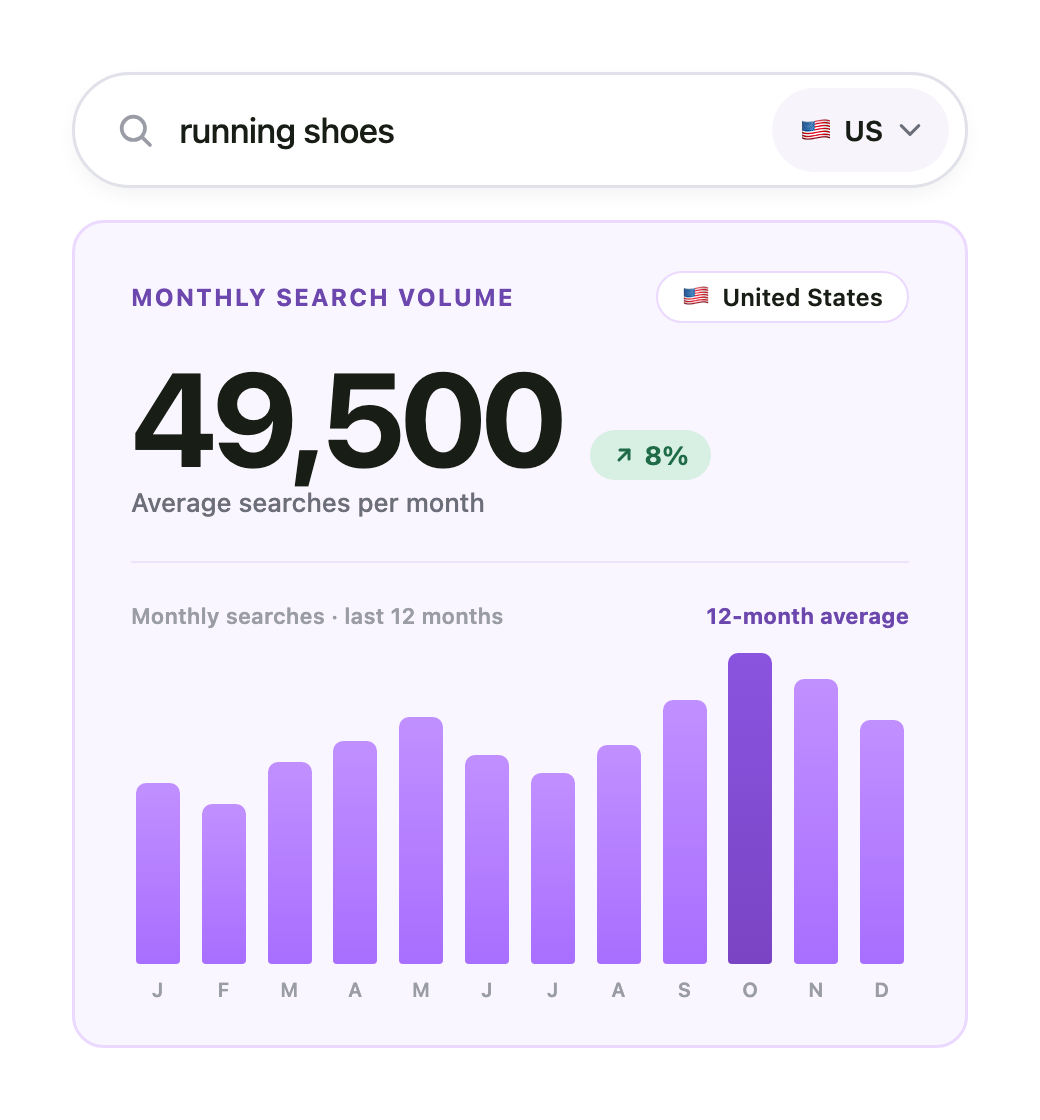
Keyword search volume is an estimate of the number of times people search for a specific keyword on Google each month in a chosen location. It helps you understand how much interest there is in a topic and how many potential visitors you could reach if you rank well for that keyword.
Search volume is based on a rolling average of monthly searches over the past 12 months. For example, a keyword with a search volume of 5,000 is searched roughly 5,000 times per month.
Search volume is also tied to location. The same keyword can have very different search volumes in the United States, the United Kingdom, or India, so it’s important to check the market you want to reach.
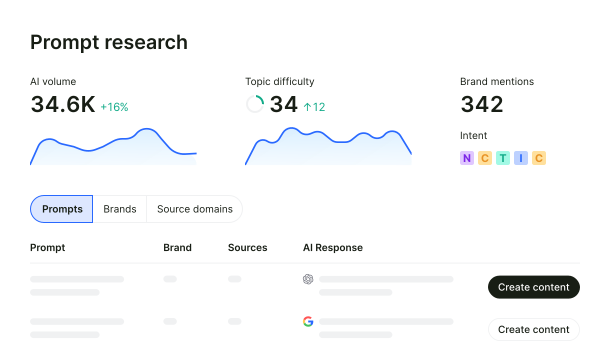
Search volume can also help you understand demand in AI search. Individual AI prompts are often highly specific and don’t have measurable search volumes, but related keyword data can show how much interest exists in the broader topics and questions those prompts cover.
Why Search Volume Matters
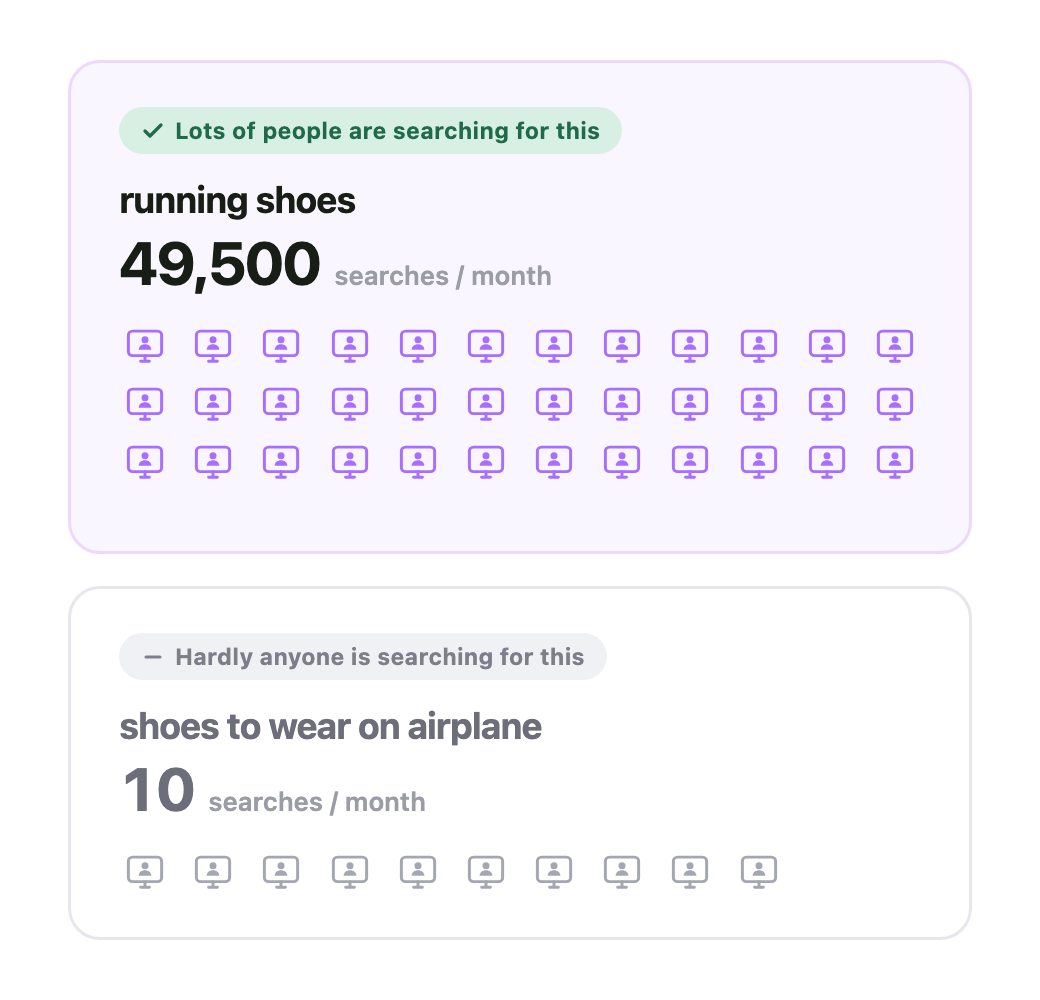
Search volume matters because it shows how much real demand there is for a topic and helps you decide which keywords, pages, and content ideas are worth prioritizing.
Instead of guessing what your audience wants, you can use keyword search volume data to find topics people are already searching for.
It also helps you compare keyword opportunities. Higher-volume keywords may offer more traffic potential, while lower-volume keywords are often longer, more specific, and easier to rank for. These searches can also come from people who already know what they want, which means they may be more likely to read, subscribe, or buy.
Search volume can also support AI search strategy by showing broader topic demand, even when individual AI prompts do not have measurable volume.
What Our Keyword Search Volume Tool Provides
Our keyword search volume tool provides the following data:
-
Monthly search volume
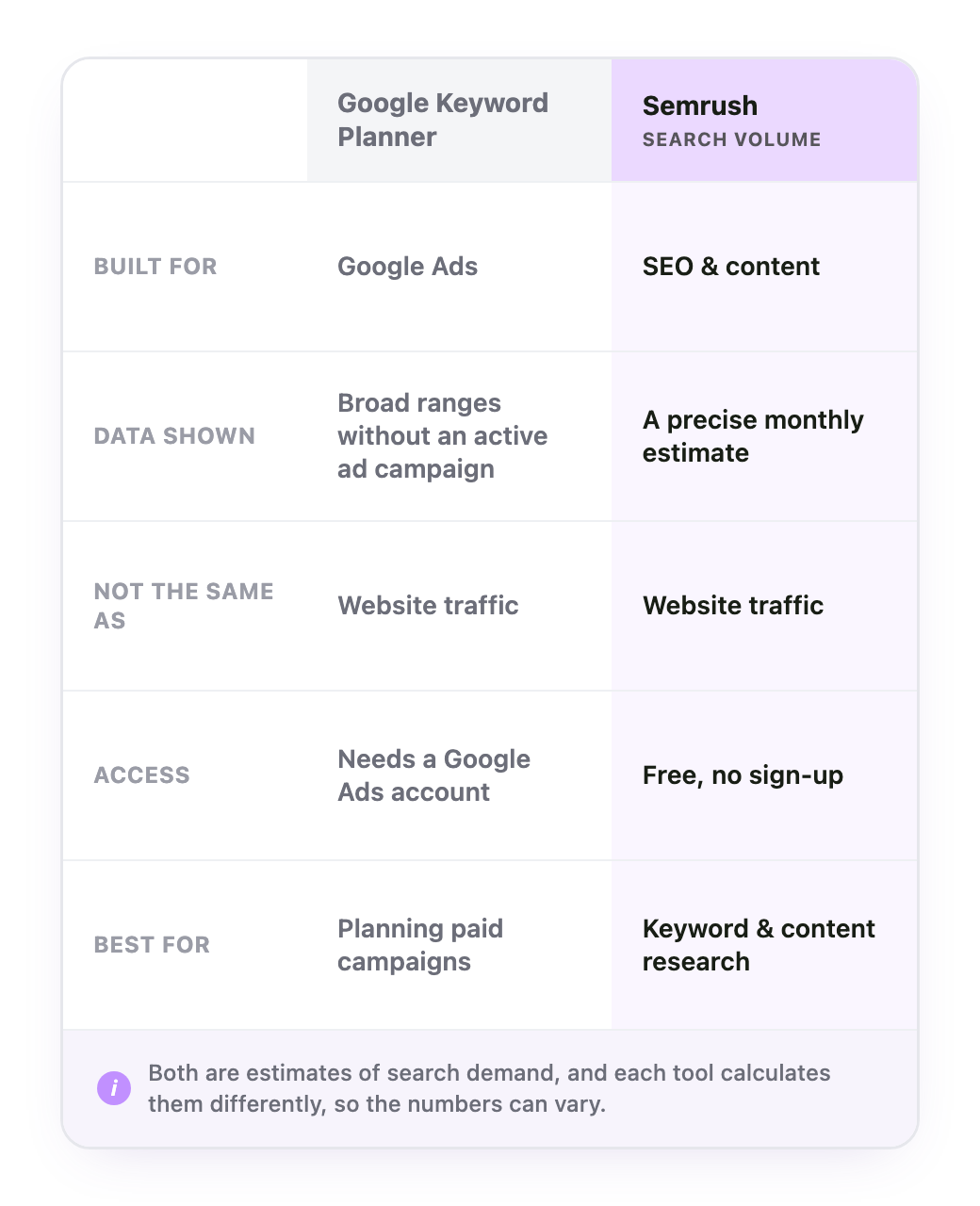
See the average number of Google searches per month for your keyword, so you know the size of the opportunity. Our keyword volume tool provides precise monthly averages, not ranges like Google’s Keyword Planner.
-
Keyword difficulty
Get a score from 0 to 100 that represents how hard it will be to rank on the first page of Google. Pair keyword difficulty with search volume to find keywords that are both popular and realistic for your site to win.
-
Search intent
See whether a keyword is informational, commercial, navigational, or transactional. Intent tells you what searchers expect to find, so you can match the keyword to the right type of page.
-
CPC
See the average cost per click advertisers pay for the keyword in Google Ads. A high CPC signals commercial value, which makes ranking for that keyword organically more difficult, but worth the effort.
-
AI Overview presence
Find out whether Google shows an AI Overview for the keyword. When an AI Overview appears, searchers often get their answer without clicking, so organic results tend to get fewer clicks. Knowing this upfront helps you determine a keyword’s real click potential.
-
Top 10 Google search results
See the top 10 pages currently ranking for the keyword, along with the SERP features that appear in the results. Reviewing the live SERP shows you who you are competing against, which features you could target, and what kind of content Google rewards for that term.

What Is a Good Search Volume?
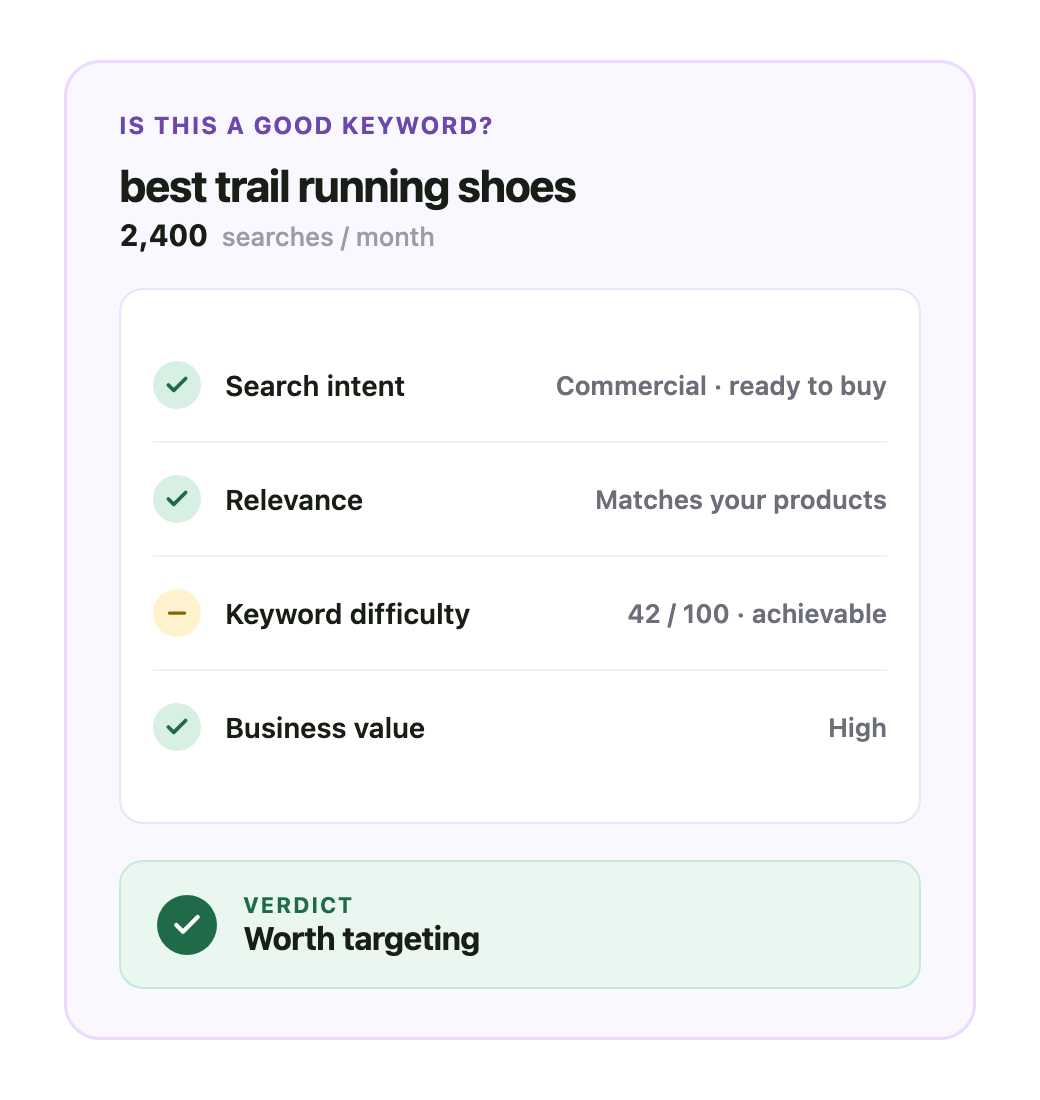
Good search volume is enough monthly search demand to justify the time, effort, and cost of creating or optimizing a page for that keyword. There’s no single number or threshold that counts as “good” for every keyword.
A keyword with 10,000 searches per month may drive a lot of traffic, but it may not be worth targeting if the intent doesn’t match your business, audience, or goals.
A keyword with 100 searches per month may be more valuable if it attracts people who are ready to read, subscribe, request a demo, or buy.
The best search volume depends on the keyword’s intent, difficulty, relevance, and business value. In general, look for keywords that have clear demand, match your audience’s needs, and can support meaningful outcomes for your website.
How to Use Keyword Search Volume
Here are six practical ways to use keyword search volume when planning SEO content.
-
Check Demand Before Creating Content
Use search volume to confirm that people are searching for a keyword before you create a new page. This helps you avoid spending time on topics with little or no search demand.
-
Compare Keyword Opportunities
Compare search volume across similar keywords to see which terms have the most potential. For example, two keywords may mean almost the same thing, but one may get far more searches than the other.
-
Prioritize Keywords by Value
Search volume can help you decide which keywords deserve attention first. Look for keywords with enough demand, clear intent, and a realistic chance to rank based on keyword difficulty.
-
Target the Right Location
Search volume changes by country, region, and market. Check keyword volume in the location you want to reach so you can choose terms that match your actual audience.
-
Build Topic Clusters
Use search volume to identify related keywords that belong together. You can target the main keyword with a primary page, then use supporting pages to cover more specific questions and subtopics.
-
Support AI Search Strategy
Use search volume to understand broader demand around topics people may also ask about in AI search. Even when individual AI prompts don’t have measurable volume, related keywords can show which topics are worth covering.
Search Volume vs. Google Keyword Planner Data
Search volume and Google Keyword Planner data both help estimate keyword search demand, but they’re not always the same. Google Keyword Planner is built for Google Ads, while Semrush search volume is designed for SEO, content planning, and keyword research.
Search volume is not an official Google metric or the exact number of searches that happened on Google. It’s an estimate, and different tools may show different numbers because they calculate keyword demand in different ways.
Search volume is also not the same as website traffic. A keyword with 10,000 searches per month doesn’t mean your page will get 10,000 visits. Your actual traffic depends on where you rank, how many people click your result, and what else appears on the search results page.
For example, features like AI Overviews and featured snippets can affect how many clicks you get, as they provide an answer to the query directly on the results page.
Use search volume as a practical way to compare keywords, prioritize opportunities, and understand which topics are worth targeting.
How We Calculate Keyword Search Volume
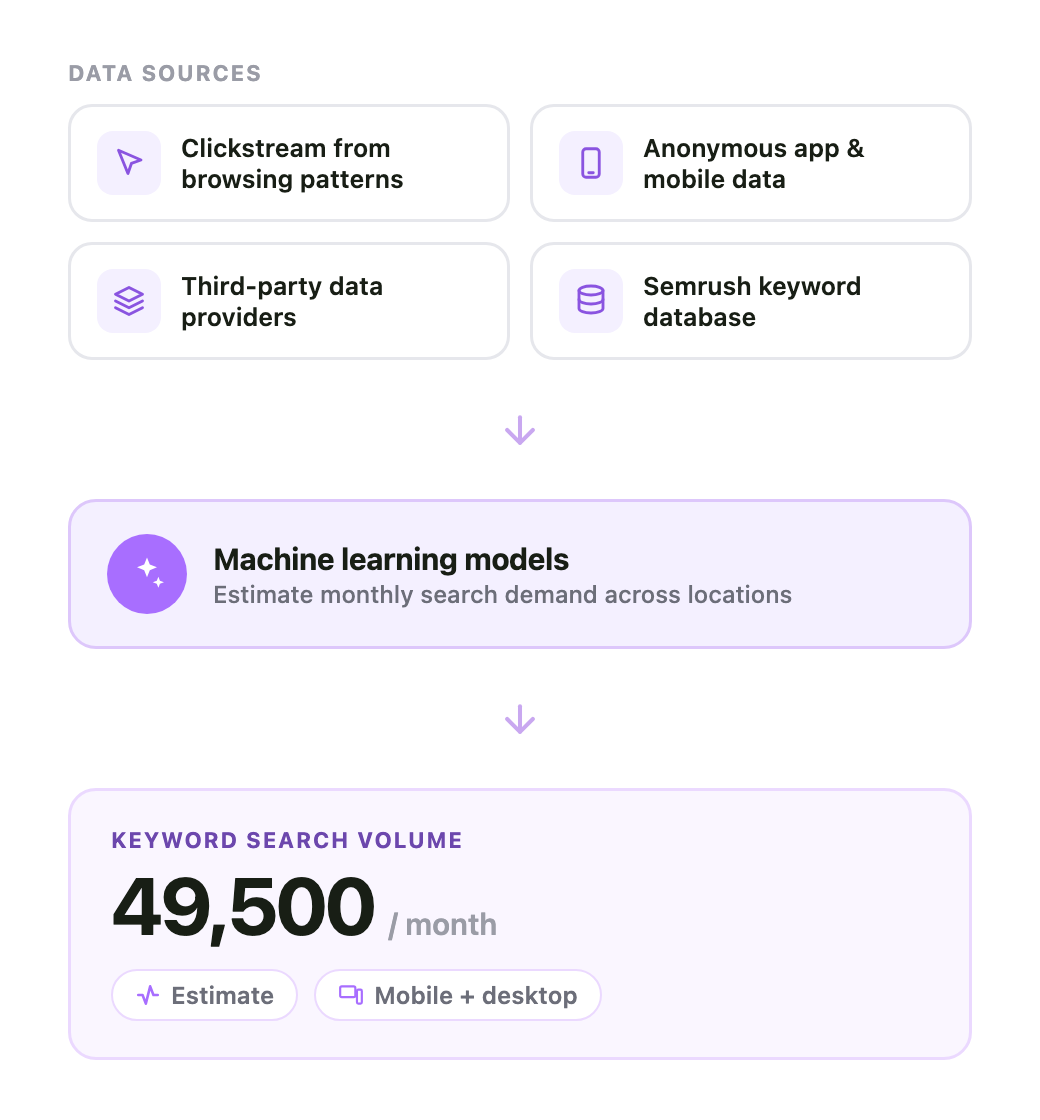
Semrush calculates keyword search volume using machine learning models and large sets of search and click data. This helps estimate how often people search for billions of keywords across different locations.
The process combines data from third-party providers with anonymous clickstream data from reliable browser and app sources. Semrush then uses machine learning models to estimate monthly search volume for each keyword.
Search volume is an estimate, not an official Google number or an exact count of searches. It’s designed to help you compare keywords, understand demand, and decide which opportunities are worth targeting.
Search volume is not split by device. Global and local volume numbers include searches from both mobile and desktop devices.
Why Use Semrush’s Keyword Search Volume Tool?
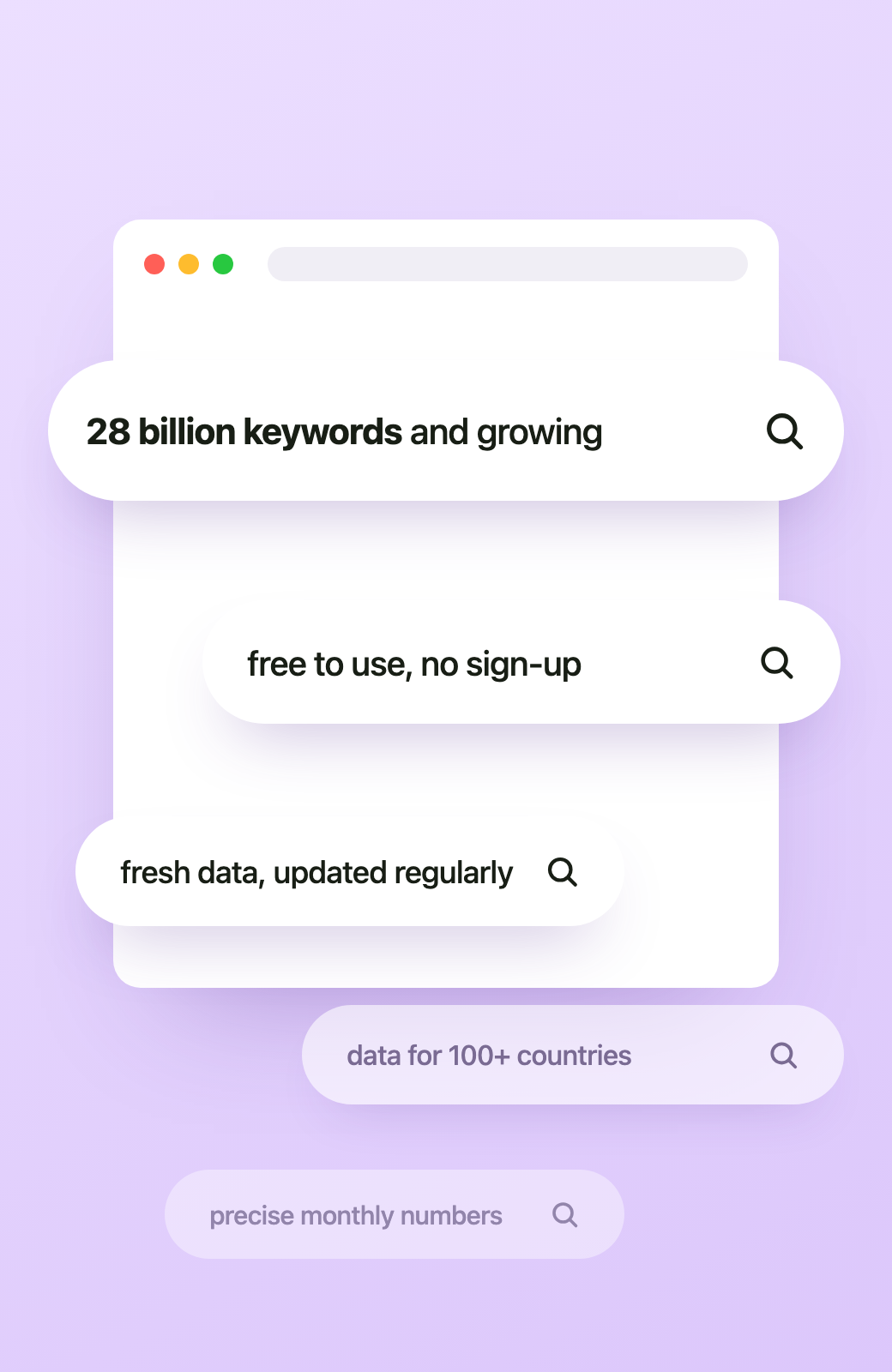
You should use Semrush’s Keyword Search Volume Checker because it gives you free, no-signup access to keyword data from one of the largest keyword databases in the industry.
- Check Search Volume Without Signing Up. Enter a keyword and get search volume data instantly. You don’t need to create an account, start a trial, or enter payment details.
- Use Data From a 28B+ Keyword Database. Semrush keyword data is built from a massive database of more than 28 billion keywords. This helps you find demand for common keywords, niche terms, and long-tail search queries.
- Work With Fresh Keyword Data. Keyword search demand changes as trends, seasons, and search behavior change. Semrush updates keyword data regularly, so you can plan with more current estimates.
- Check Demand by Country. Search volume can change a lot from one market to another. Semrush lets you check keyword demand for your target country, so you can focus on the audience you actually want to reach.
- Get Clear Numbers for SEO Planning. Semrush gives you estimated monthly search volume as a clear number you can use to compare keywords. This makes it easier to prioritize content ideas, choose target keywords, and focus on opportunities worth pursuing.
Whether you’re creating content or researching a new niche, the tool gives you the data you need to choose keywords with confidence.
Frequently Asked Questions
- Small business owners: Use it to find keywords people search for before creating service pages, product pages, or blog content.
- SEO beginners: Use it to understand which keywords have real demand and start learning how to compare keyword opportunities.
- Content marketers: Use it to validate topic ideas before writing new content or updating existing pages.
- Freelancers and consultants: Use it to do quick keyword checks for clients, prospects, or early-stage content plans.
Is Semrush’s Keyword Search Volume Checker free to use?
Yes, the Keyword Search Volume Checker is free to use. You can check keyword search volumes and other keyword metrics for free, with a limited number of checks per day and no account required.
For more search volume checks, more insights, and advanced keyword research tools, you can create a free Semrush account or upgrade to a paid Semrush plan.
How accurate is keyword search volume?
Keyword search volume is an accurate estimate of monthly search demand, but it’s not an exact count or an official number from Google. Semrush calculates search volume using large data sets, anonymous clickstream data, and machine learning models to estimate how often people search for a keyword.
Search volume is most useful for comparing keywords, assessing demand, and prioritizing content opportunities. Treat it as a directional metric, not a guaranteed traffic number.
Is search volume the same as website traffic?
No, search volume is not the same as website traffic. Search volume estimates how many times people search for a keyword each month, while website traffic is the number of visits your site actually gets.
If your page ranks well for a keyword, it may earn a portion of that keyword’s search volume as traffic. The exact amount depends on your ranking position, the search results layout, the title and description of your page, and how many people click your result.
Your page may also get traffic from related keywords, not just the main keyword you target. That means a page targeting a keyword with 1,000 monthly searches could end up getting more than 1,000 visits per month if it also ranks for many similar searches.
Who should use this free keyword search volume tool?
This free keyword search volume tool should be used by anyone who wants to quickly check whether a keyword has enough search demand to be worth targeting, including:
For more powerful keyword research tools, use Semrush’s Keyword Overview or Keyword Magic Tool to access deeper data, more keyword ideas, and advanced filters.
How can I use search volume for AI search strategy?
You can use search volume for AI search strategy by identifying the topics, questions, and problems people already search for, then creating content that clearly answers them. While individual AI prompts are often too specific to have measurable search volume, related keywords can show broader demand around a topic.
Use search volume to decide which topics are worth covering, which pages to update, and which questions your content should answer. This can help your site become a stronger source for both traditional search results and AI-generated answers.